
Dealing with NC Red Clay: How to Protect Your Home’s Foundation from Drainage Issues.
5 min read
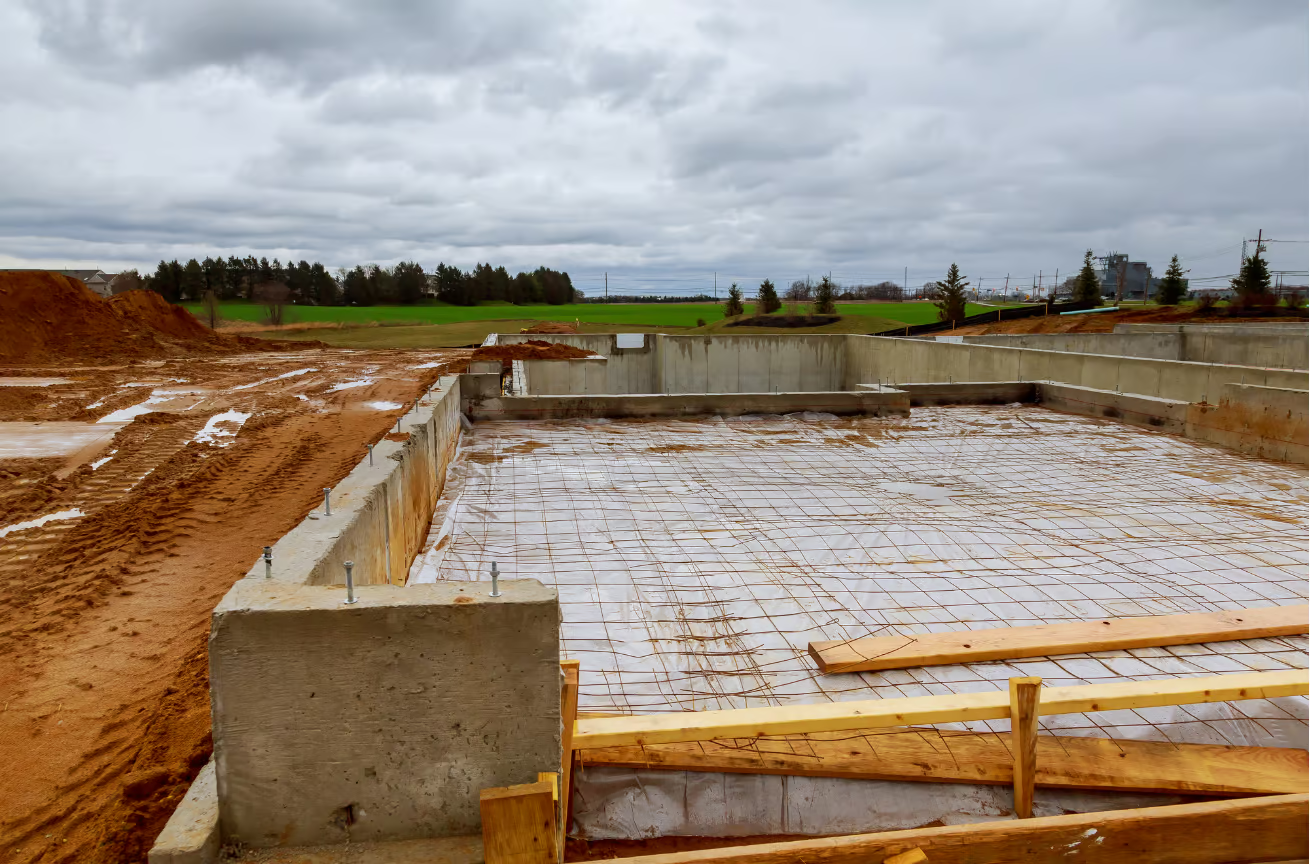
If you own a home in the North Carolina Piedmont, you are well acquainted with our infamous red clay.
It stains your shoes, it is a nightmare to dig through, and it clings to everything it touches. But while most homeowners only complain about clay when they are trying to plant a garden, real estate experts look at it with a completely different concern: foundation stability.
At DASH Carolina, our promise is to tell you the unvarnished truth about homeownership. We are not here to just hand you a set of keys and wish you luck. We want you to understand the actual structural science of your property.
North Carolina's red clay behaves entirely differently than sandy coastal soils or mountain loam. If you do not manage how water flows across this dense earth, your foundation will eventually pay the price. Here is what you need to know about the science of NC clay and how to protect your biggest investment.
It stains your shoes, it is a nightmare to dig through, and it clings to everything it touches. But while most homeowners only complain about clay when they are trying to plant a garden, real estate experts look at it with a completely different concern: foundation stability.
At DASH Carolina, our promise is to tell you the unvarnished truth about homeownership. We are not here to just hand you a set of keys and wish you luck. We want you to understand the actual structural science of your property.
North Carolina's red clay behaves entirely differently than sandy coastal soils or mountain loam. If you do not manage how water flows across this dense earth, your foundation will eventually pay the price. Here is what you need to know about the science of NC clay and how to protect your biggest investment.
The Core Problem: The "Clay Bowl Effect"
To understand why drainage is so critical in North Carolina, you have to understand how clay interacts with water.
When a developer builds a house, they dig a massive hole in the native, undisturbed clay to pour the footings and lay the foundation. Once the foundation walls are up, they shovel that excavated soil back into the empty space around the exterior walls. This is known as backfill soil.
This creates a hidden structural hazard known as the clay bowl effect.
The undisturbed, virgin clay farther out in your yard is tightly compacted and almost entirely waterproof. However, the backfill soil right next to your foundation is loose and porous. When a heavy Carolina thunderstorm hits, the water runs off your yard, bypasses the hard-packed clay, and dumps directly into the loose backfill soil next to your house.
Because the underlying native clay acts like a giant, waterproof bowl, that water cannot drain downward. Instead, it pools right against your foundation walls.
When a developer builds a house, they dig a massive hole in the native, undisturbed clay to pour the footings and lay the foundation. Once the foundation walls are up, they shovel that excavated soil back into the empty space around the exterior walls. This is known as backfill soil.
This creates a hidden structural hazard known as the clay bowl effect.
The undisturbed, virgin clay farther out in your yard is tightly compacted and almost entirely waterproof. However, the backfill soil right next to your foundation is loose and porous. When a heavy Carolina thunderstorm hits, the water runs off your yard, bypasses the hard-packed clay, and dumps directly into the loose backfill soil next to your house.
Because the underlying native clay acts like a giant, waterproof bowl, that water cannot drain downward. Instead, it pools right against your foundation walls.
Hydrostatic Pressure and Soil Expansion
When red clay absorbs water, it undergoes a dramatic physical transformation. It is considered an expansive soil. It swells significantly when wet and shrinks drastically when it dries out.
As the clay next to your home saturates and expands, it exerts immense lateral pressure against your foundation walls. This is called hydrostatic pressure. Over time, this constant cycle of expanding and contracting causes major structural issues:
As the clay next to your home saturates and expands, it exerts immense lateral pressure against your foundation walls. This is called hydrostatic pressure. Over time, this constant cycle of expanding and contracting causes major structural issues:
Stair-step cracks in your exterior brickwork or interior concrete blocks.
Bowing walls in basements or crawl spaces as the soil pushes the masonry inward.
Differential settlement where one corner of the house sinks faster than the rest because the soil dried out and shrunk unevenly.
3 Critical Steps to Protect Your NC Foundation
You cannot change the geology of North Carolina, but you can entirely control how water interacts with your home. To keep your foundation safe from the clay bowl effect, implement these three defense strategies.
1. Establish a Flawless Positive Grade: The ground immediately surrounding your foundation should slope away from your house, not toward it. You want a minimum slope of six inches of drop over the first ten feet away from your foundation walls. If your yard has settled over the years and created low spots next to the house, you need to add clean soil to re-establish that positive slope. Never let water pool within five feet of your home.
2. Extend Your Downspouts (The Easiest Fix): Your roof captures thousands of gallons of water during a typical summer downpour. If your gutters dump that water directly at the corners of your house, you are actively pumping water straight into the clay bowl.
The Rule: gutters must clean out at least six to ten feet away from the foundation. You could hire a drainage professional to pipe your downspouts underground, routing the water completely out of the backfill zone and discharging it toward a local storm drain or a natural lower clearing in your yard.
3. Install a French Drain System: If your home sits at the bottom of a slope or has a basement that constantly battles dampness, surface grading might not be enough. You need to intercept sub-surface water before it reaches your walls. A French drain uses a perforated pipe buried in a trench filled with gravel. Water naturally follows the path of least resistance into the gravel, drops into the pipe, and flows safely away from your home's structural footprint.
The DASH Reality Check: Watch Out for Quick Fixes
If you are buying a home or preparing to sell your current property, foundation warnings can completely stall a transaction.
Here is our upfront advice: do not panic, but do not look for cheap shortcuts either. Slapping a layer of waterproof paint on the inside of a cracked basement wall does not solve the problem. It just hides the symptom while the hydrostatic pressure continues to build outside.
At DASH Carolina, we believe informed buyers make better decisions. During the home inspection process, our agents pay close attention to signs that may warrant further evaluation, such as standing water in a crawl space or efflorescence (the white, powdery mineral deposits that can appear on foundation walls).
While our agents are not structural engineers, we help buyers understand potential concerns and connect them with qualified professionals when additional expertise is needed. Depending on the situation, that may include a structural engineer, drainage specialist, or other licensed contractor who can provide a thorough assessment and recommendations.
If issues are identified, we'll help you navigate your options, gather the right information, and negotiate repairs or solutions when appropriate before moving forward with your purchase.
Wondering whether drainage, grading, or foundation concerns could be affecting a property you're considering? Reach out to a local DASH Carolina expert. We're happy to help you understand what you're seeing and connect you with trusted professionals who can provide the guidance you need.
Here is our upfront advice: do not panic, but do not look for cheap shortcuts either. Slapping a layer of waterproof paint on the inside of a cracked basement wall does not solve the problem. It just hides the symptom while the hydrostatic pressure continues to build outside.
At DASH Carolina, we believe informed buyers make better decisions. During the home inspection process, our agents pay close attention to signs that may warrant further evaluation, such as standing water in a crawl space or efflorescence (the white, powdery mineral deposits that can appear on foundation walls).
While our agents are not structural engineers, we help buyers understand potential concerns and connect them with qualified professionals when additional expertise is needed. Depending on the situation, that may include a structural engineer, drainage specialist, or other licensed contractor who can provide a thorough assessment and recommendations.
If issues are identified, we'll help you navigate your options, gather the right information, and negotiate repairs or solutions when appropriate before moving forward with your purchase.
Wondering whether drainage, grading, or foundation concerns could be affecting a property you're considering? Reach out to a local DASH Carolina expert. We're happy to help you understand what you're seeing and connect you with trusted professionals who can provide the guidance you need.
Recent News and Articles
Let's stay in touch...