
Native Planting: Landscaping for the Piedmont
5 min read
7 Native NC Plants That Survive Heat and Humidity
If you have spent even one summer in the North Carolina Piedmont, you know our climate does not play nice with delicate landscaping.
By the time late July rolls around, the combination of baking heat, oppressive humidity, and heavy, compacted red clay turns many pristine suburban yards into crunchy, brown disaster zones. Homeowners end up trapped in an expensive, frustrating cycle of over-watering, over-fertilizing, and replacing dead shrubs every single spring.
At DASH Carolina, we believe a home should give you peace of mind, not a never-ending weekend to-do list. That is why we love talking about functional, smart home ownership.
The easiest way to beat the elements is to stop fighting against North Carolina’s natural ecosystem. By introducing native plants to your landscape, you are using flora that has spent thousands of years adapting specifically to our weather patterns and soil types. They do not need pampered treatment; they are built for this.
Here are seven native North Carolina plants that will survive the brutal Piedmont summers while keeping your curb appeal completely intact.
By the time late July rolls around, the combination of baking heat, oppressive humidity, and heavy, compacted red clay turns many pristine suburban yards into crunchy, brown disaster zones. Homeowners end up trapped in an expensive, frustrating cycle of over-watering, over-fertilizing, and replacing dead shrubs every single spring.
At DASH Carolina, we believe a home should give you peace of mind, not a never-ending weekend to-do list. That is why we love talking about functional, smart home ownership.
The easiest way to beat the elements is to stop fighting against North Carolina’s natural ecosystem. By introducing native plants to your landscape, you are using flora that has spent thousands of years adapting specifically to our weather patterns and soil types. They do not need pampered treatment; they are built for this.
Here are seven native North Carolina plants that will survive the brutal Piedmont summers while keeping your curb appeal completely intact.
1. Purple Coneflower (Echinacea purpurea)
This is the absolute workhorse of the Carolina summer garden. Boasting vibrant, pinkish-purple petals and prominent seed cones, it is as tough as it is beautiful.
Why It Wins: Once its root system is established, the Purple Coneflower is incredibly drought-tolerant. It thrives in full, unobstructed sun and completely ignores the mid-summer humidity.
The Bonus: Local pollinators, especially bumblebees and butterflies, absolutely love it. In the fall, goldfinches will visit your yard to feast on the dried seed heads.
2. Carolina Jessamine (Gelsemium sempervirens)
If you need to cover a fence, trellis, or mailbox with a lush, climbing vine, this is the official state flower of South Carolina, and it performs beautifully across the entire Piedmont region.
Why It Wins: It is a fast-growing, evergreen vine that brings early-season color to your yard, bursting with fragrant, bright yellow flowers as early as late winter or early spring.
The Bonus: Because it keeps its glossy green leaves year-round, it serves as an excellent natural privacy screen even during the dead of winter.
3. Little Bluestem (Schizachyrium scoparium)
Do not underestimate the power of native ornamental grasses to add texture and movement to your landscaping. Little Bluestem is a structural standout that loves our local soil.
Why It Wins: This grass actually prefers poor, dry soils and thrives in our heavy Piedmont clay. It handles intense summer heat without drooping or losing its shape.
The Bonus: It offers incredible seasonal transitions. It starts the summer with a distinct blue-green hue, turns a striking bronze-orange in the autumn, and stands tall through winter snow and ice.
4. Eastern Redbud (Cercis canadensis)
If you are looking for a small understory tree to frame your front porch or add layers to your yard, skip the finicky, non-native options and plant a Redbud.
Why It Wins: The Eastern Redbud is highly adaptable to both full sun and partial shade. It handles the humid climate effortlessly and stays relatively compact, usually topping out around twenty to thirty feet.
The Bonus: It provides one of the very first signs of spring in North Carolina, covering its bare branches in stunning, magenta-pink blossoms before its heart-shaped leaves even emerge.
5. Joe-Pye Weed (Eutrochium fistulosum)
Do not let the word "weed" fool you. This is a regal, massive perennial that makes a spectacular backdrop for any garden bed or fence line.
Why It Wins: Joe-Pye Weed is a native giant that can easily reach five to seven feet tall. It shrugs off summer storms and humidity, producing massive, vanilla-scented clusters of pinkish-purple flowers in late summer.
The Bonus: It is a magnet for swallowtail butterflies. If you want a yard full of active, local wildlife, this plant is non-negotiable.
6. Fothergilla (Fothergilla gardenii)
Also known as Coastal Witch Alder, this slow-growing native shrub is the perfect replacement for overused, high-maintenance landscape bushes like boxwoods or non-native hydrangeas.
Why It Wins: It is remarkably disease-resistant and tolerates the damp, heavy clay conditions that often rot the roots of exotic plants.
The Bonus: It offers multi-season interest. In the spring, it produces unique, honey-scented white flowers that look like little bottlebrushes. In the fall, its leaves turn a brilliant, fiery mix of red, orange, and yellow.
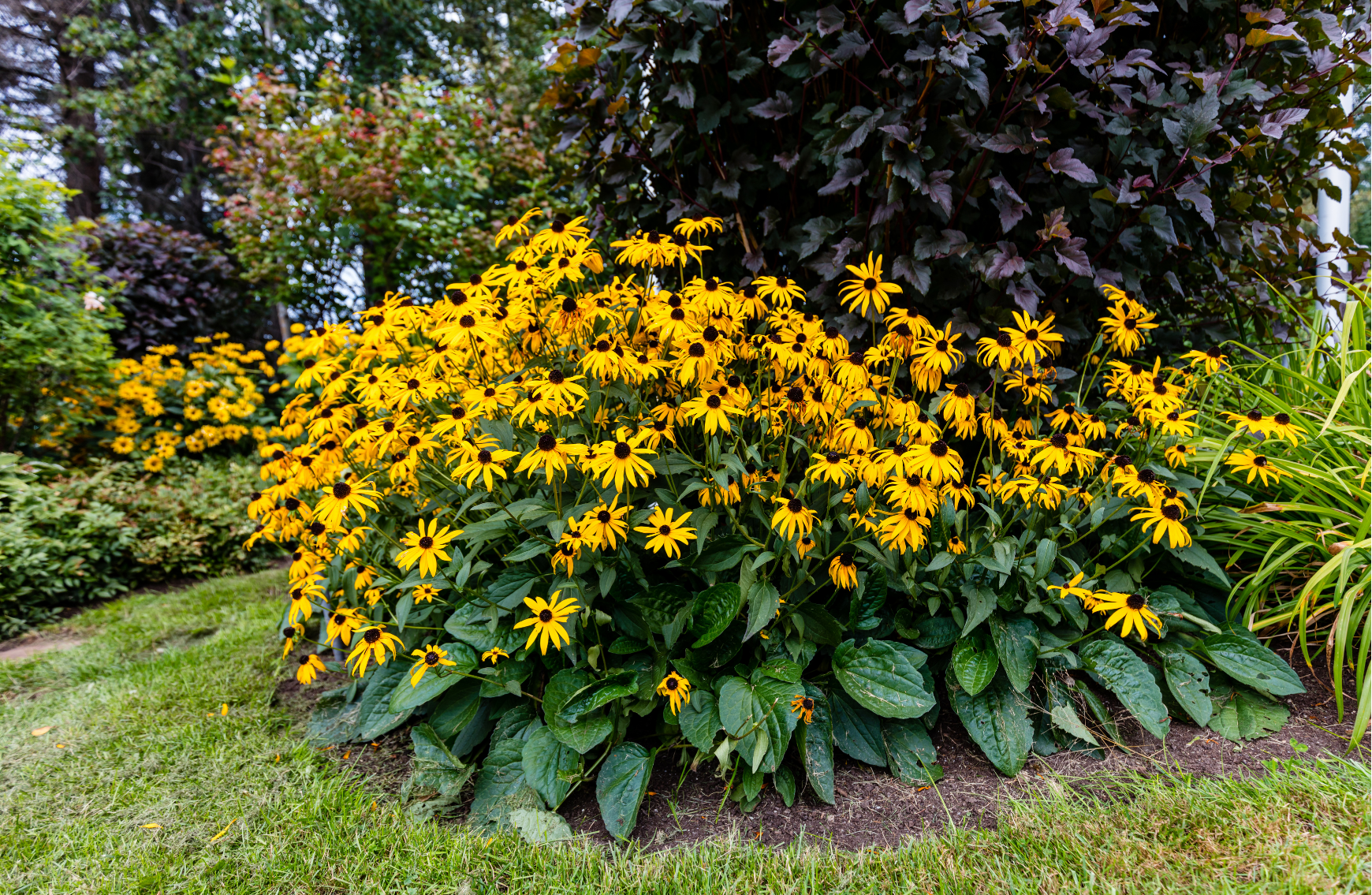
7. Black-Eyed Susan (Rudbeckia fulgida)
A classic for a reason. These cheerful, golden-yellow daisy-like flowers with dark brown centers are synonymous with a Carolina summer.
Why It Wins: They are practically indestructible. They will bloom continuously from June all the way to the first frost, ignoring drought conditions and thriving in the poorest soil conditions the Piedmont can throw at them.
The Bonus: They spread naturally over time, giving you a dense, colorful groundcover that chokes out actual, unwanted weeds.
The DASH Reality Check: Plant Selection Impacts Property Value
Let’s talk about the practical real estate side of landscaping. Beautiful curb appeal can add significant value to your home, but high-maintenance landscaping can actually scare buyers away.
Modern buyers in 2026 are looking for efficiency. When a prospective buyer walks up to a house and sees exotic, delicate plants that require an expensive irrigation system and weekly professional manicuring, they see a chore. When they see a lush, self-sustaining landscape filled with thriving native species, they see an easy, lock-and-leave lifestyle.
Investing in native Piedmont plants means you spend less money on your water bill, zero dollars on chemical fertilizers, and less time working on your knees in the dirt. It is a win for the local environment, and a massive win for your free time.
Thinking about upgrading your home’s curb appeal before hitting the market? Contact a local DASH Carolina agent today. We will give you a straightforward, data-backed assessment of which home improvements yield the highest return on investment in your specific neighborhood.
Modern buyers in 2026 are looking for efficiency. When a prospective buyer walks up to a house and sees exotic, delicate plants that require an expensive irrigation system and weekly professional manicuring, they see a chore. When they see a lush, self-sustaining landscape filled with thriving native species, they see an easy, lock-and-leave lifestyle.
Investing in native Piedmont plants means you spend less money on your water bill, zero dollars on chemical fertilizers, and less time working on your knees in the dirt. It is a win for the local environment, and a massive win for your free time.
Thinking about upgrading your home’s curb appeal before hitting the market? Contact a local DASH Carolina agent today. We will give you a straightforward, data-backed assessment of which home improvements yield the highest return on investment in your specific neighborhood.
Recent News and Articles
Let's stay in touch...